Optimizing Karma XPU on Multi-GPU RTX 5090 for Heavy VFX Pipelines
Adding more GPUs to Karma XPU can speed up rendering, but performance does not scale perfectly with the number of cards. Startup overhead, device-specific shader compilation, CPU participation, and per-GPU VRAM limits can all affect the result. This makes Karma XPU multi GPU RTX 5090 optimization less about adding more hardware and more about understanding where the real bottleneck is. In this article, we will look at how Karma XPU behaves across multiple GPUs, how to measure real scaling, and what to optimize before adding another RTX 5090.
What actually happens when you add GPUs to Karma XPU
Adding more GPUs to Karma XPU can reduce render time, but the speedup does not increase in direct proportion to the number of cards. Karma XPU can use multiple NVIDIA GPUs alongside the Embree CPU device, and each GPU contributes separately to the render.
The final performance still includes work outside raw GPU rendering. XPU has device initialization and device-specific shader compilation, while scene synchronization must finish before rendering begins. CPU-side work can also matter, especially when fast or multiple GPUs are paired with a slower CPU. This is why adding a second or fourth RTX 5090 should be measured on the actual scene rather than assumed to deliver 2x or 4x performance.
There is another important limit: VRAM does not pool across GPUs. Karma XPU addresses each GPU separately, so two RTX 5090 cards with 32GB each do not behave like a single 64GB GPU. We will look more closely at what this means for heavy Houdini scenes below.

The startup cost multiplies with devices
Before Karma XPU starts rendering, it compiles shaders into device-specific formats. Adding more GPU devices therefore adds device-specific work during initialization, so a multi-GPU setup can have more startup overhead even when the final render is faster. SideFX notes that the first compilation on a new Houdini installation or GPU driver can take up to one or two minutes, while compiled results are cached for faster subsequent use.
For repeated renders, keep the Houdini version and NVIDIA driver stable so existing compiled results can be reused. You can also use Pre-compile Karma XPU Render Kernels to reduce kernel compilation overhead before a render session. However, this does not eliminate all compilation work, so the startup phase should still be included when evaluating the real benefit of adding more GPUs.
Measure your own scaling instead of trusting a number
The most reliable way to evaluate multi-GPU scaling is to benchmark your own scene. Render the same representative frame with one GPU, then repeat the test with two and four GPUs while keeping the scene, render settings, resolution, and software environment unchanged. Record the render time for each run and calculate the actual speedup against the single-GPU result.
For example, if T1T_1 is the render time with one GPU and TnT_n is the time with multiple GPUs, you can calculate the scaling factor as T1/TnT_1 / T_n. A result of 1.7 means the tested configuration completed the render 1.7 times as fast as the single-GPU setup. Do not assume that two GPUs will produce 2x scaling or four GPUs 4x scaling.
The result can differ from scene to scene because GPU rendering is only part of the workload. Shader compilation, scene preparation and synchronization, CPU-side work, and GPU memory pressure can all affect the total time. For Karma XPU optimization, your own representative scene is therefore more useful than a generic multi-GPU scaling number.
Optimizing the scene before optimizing the hardware
Before adding more GPUs, reduce unnecessary work inside the scene. In Karma XPU, shaders are compiled into device-specific formats, so keeping material and shader variation under control can help limit compilation work. This does not mean simplifying every material, but avoiding redundant variations that add complexity without changing the final image.
Memory also deserves attention. Use texture resolutions that match what the camera actually needs, and keep large volume datasets under control, especially in VFX scenes where they can consume substantial memory. Since VRAM does not pool across GPUs, reducing the scene footprint can be more useful than adding another card when memory is the main constraint.
Finally, build materials with shading features that Karma XPU supports. SideFX documents support for MaterialX, USD Preview Surface, and supported Karma-specific VOPs, while some features available in Karma CPU are still unsupported or behave differently in XPU. Checking XPU compatibility early can prevent unnecessary shader work and rendering issues later.

When more cards is the right answer and when it is not
Adding more GPUs is useful when the scene already fits within the VRAM of each card and the main goal is to reduce render time across a long frame sequence or multiple shots. The improvement will still be sublinear, so the actual benefit should be measured with your own Karma XPU scene.
More GPUs are less helpful when the bottleneck is somewhere else. A scene that exceeds the practical VRAM budget of one GPU does not gain a larger pooled memory space by adding another card. Likewise, adding GPUs does not directly solve long XPU startup times or CPU-side bottlenecks. In those cases, optimizing the scene, stabilizing the render environment, or improving the CPU and data pipeline should come first.
| Problem | Will adding GPUs help? | What to do |
|---|---|---|
| A long frame sequence takes too long | Yes, but scaling is sublinear | Measure real scaling with your scene |
| A scene exceeds the VRAM of one GPU | No, VRAM does not pool | Reduce the scene memory footprint or use a GPU with more VRAM |
| Karma XPU startup takes too long | No, and more devices can add startup work | Keep the software and driver environment stable and reuse cached compilation where possible |
| The bottleneck is CPU-side work | Limited | Optimize the CPU-side workload or use a faster CPU |
| Many shots need to render at the same time | Yes, often effectively | Distribute independent render jobs across available resources |
Scale Karma XPU rendering with iRender
For heavy Karma XPU projects, iRender gives you access to remote GPU workstations that you can configure much like your own machine. This makes it practical to move demanding Houdini renders to more powerful GPU hardware when your local workstation becomes the bottleneck. You can install your preferred Houdini environment, prepare the scene locally, then use the remote workstation for final frames, long sequences, or multiple render jobs. For Karma XPU multi GPU RTX 5090 optimization, the same rule still applies: test your actual scene and measure the improvement before deciding how much GPU power you need.
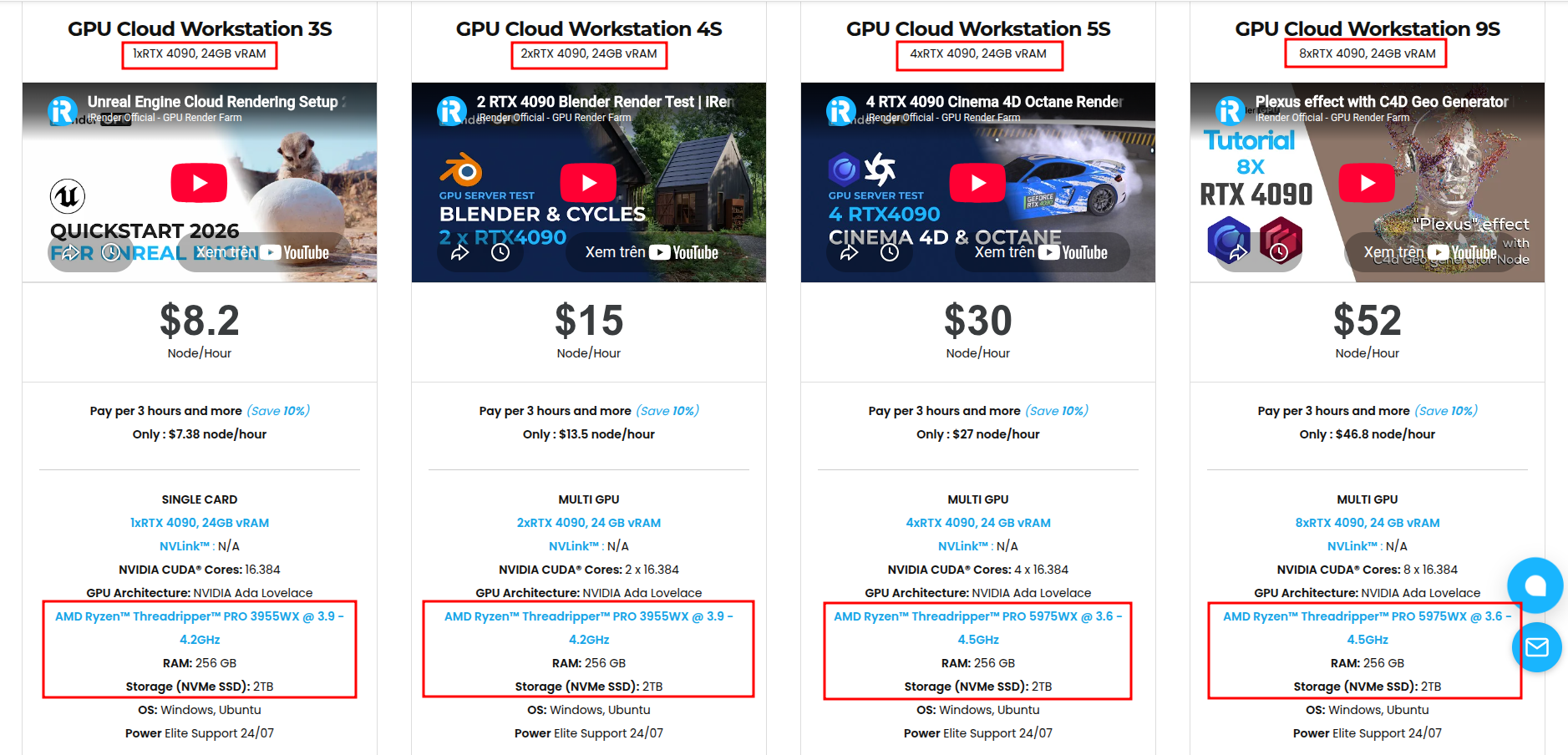
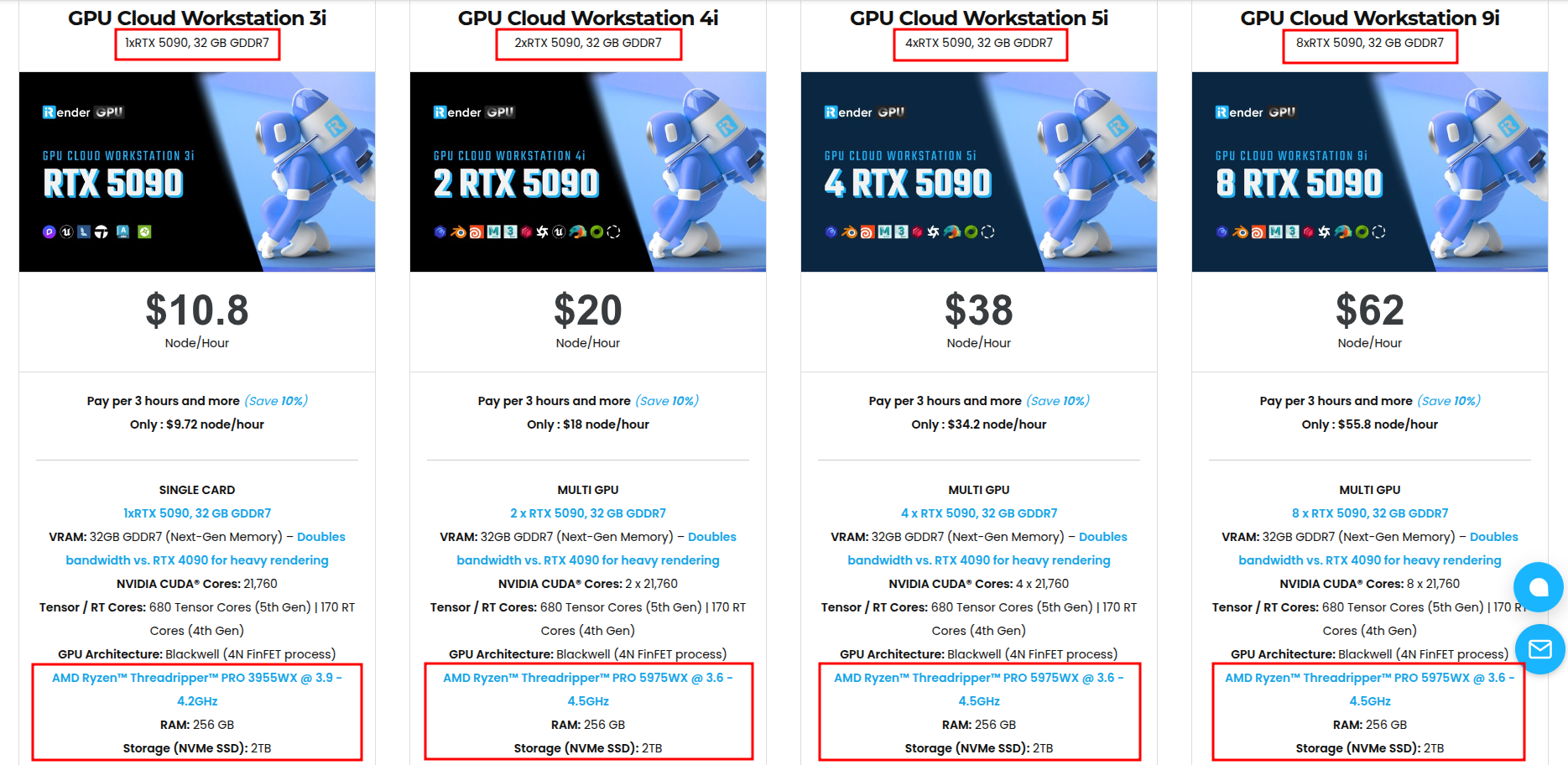
Available configurations include:
- CPU: AMD Ryzen™ Threadripper™ PRO 3955WX (3.9-4.2GHz) and AMD Ryzen™ Threadripper™ PRO 5975WX (3.6-4.5GHz)
- GPU: 1/2/4/8 RTX 4090 with 24GB vRAM and 1/2/4/8 RTX 5090 with 32GB vRAM
For new users, iRender currently offers a 100% bonus on the first deposit within 24 hrs of registration, giving you additional rendering credits to get started with larger projects.
Maximum Speed – Absolute Freedom
Source: SideFX Docs, NVIDIA
Let’s see how our service works:

FAQ
1. Does Karma XPU scale linearly with multiple GPUs?
No. Adding more GPUs can improve Karma XPU performance, but the speedup does not increase directly with the number of cards. Startup work, device-specific shader compilation, CPU participation, synchronization, and scene characteristics can all affect scaling. The most reliable approach is to benchmark the same representative scene with different GPU counts.
2. Do two RTX 5090s give me 64GB of VRAM?
No. Each RTX 5090 has 32GB of VRAM, and VRAM does not pool across GPUs in Karma XPU. Two RTX 5090s therefore provide two separate 32GB memory spaces, not a single 64GB pool. If a scene puts one GPU under heavy memory pressure, adding another RTX 5090 does not simply double the available memory for that scene.
3. Why does Karma XPU take longer to start on a multi-GPU machine?
Karma XPU compiles shaders into device-specific formats, so using more devices can add work during initialization. SideFX caches compiled results for reuse, which can reduce this overhead on subsequent renders. Keeping your Houdini environment and GPU driver stable can also help you benefit from previously cached compilation.
Related Posts
The latest creative news from Houdini Cloud Rendering , 3D VFX Plugins & Cloud Rendering.