Karma XPU Shader Compiling Takes Forever: What You Can Actually Do
Karma XPU can sometimes look like it has stalled before the first useful render appears. In many cases, however, XPU is compiling shaders into device-specific formats, a process SideFX documents as causing pauses when loading a new scene or enabling a new feature. This guide explains why Karma XPU shader compile slow happens, what can trigger compilation again, and what you can do to reduce the waiting time without blindly changing XPU settings.
Why does Karma XPU pause before it renders?
A pause before Karma XPU starts rendering does not necessarily mean the renderer is slow or stuck. SideFX explains that XPU compiles shaders into device-specific formats, which can cause pauses or stuttering when starting up, loading a new scene, or using a new feature.
This compilation time is separate from the actual render time. Once compiled, shader data can be cached and reused when the relevant conditions remain unchanged, reducing compilation work later. You can also check the compilation status shown in the viewport to confirm whether XPU is compiling rather than actively rendering.
What triggers a recompile?
Karma XPU may need additional shader compilation when you load a new scene or enable a feature that requires a shader it has not compiled yet. SideFX also notes that the initial compilation can occur with a new Houdini installation or a new GPU driver. The compiled results are cached, which is why later compilation stages are generally faster.
Material changes can also introduce shader configurations that XPU has not compiled before, especially as a scene uses more supported MaterialX or Karma-specific shading features. However, changing a material does not automatically mean that every shader must be rebuilt.
This matters when moving between machines. Because XPU compiles shaders into device-specific formats, you should not assume that a cache created for one GPU, driver, or software environment will eliminate compilation on another. For artists switching workstations frequently, keeping the Houdini version, GPU driver, and working environment consistent can help avoid unnecessary first-time compilation, while SideFX’s Karma XPU pre-compiling feature is specifically designed to reduce long compile times and pauses.
Reduce how much there is to compile
A practical way to reduce shader compilation work is to limit unnecessary material and shader variation in the scene. Where several objects can share the same material setup, reuse it instead of creating separate shader networks that produce additional shader combinations.
It also helps to finalize materials during look development rather than making frequent shader changes during final rendering. This will not eliminate Karma XPU compilation, but keeping the shading setup simpler and more stable can reduce the number of new shader configurations XPU encounters.
Let the cache work for you
Karma XPU caches compiled results so they can be reused, reducing shader compilation pauses after the initial work. SideFX also provides Pre-compile Karma XPU Render Kernels to reduce time to the first pixel and interruptions during interactive work.
Keeping your Houdini installation and GPU driver stable also helps because SideFX notes that a new Houdini installation or GPU driver update can require kernel recompilation. If you know a project will rely heavily on XPU, consider pre-compiling the render kernels before look development or lighting rather than waiting for compilation during time-sensitive work. Pre-compilation is optional and applies to OptiX render kernels, not user shaders.
Quick guide to Karma XPU recompilation
| Situation | Can trigger compilation? | What you can do |
| Load a new scene | Yes, if required shaders or kernels are not already compiled | Allow compilation before time-sensitive work |
| Introduce new shader features | Yes, when new compilation is required | Keep unnecessary shader variation low |
| Update Houdini or the GPU driver | Can require recompilation | Avoid unnecessary environment changes during a project |
| Move to a different machine or GPU | May require compilation again | Keep the working environment consistent where practical |
| Reopen the scene in the same environment | Cached results may reduce compilation | Keep the relevant cache and environment stable |
The environment variables, used carefully
SideFX documents several environment variables for controlling how Karma XPU handles textures and mip-mapping. These settings can change memory use and image quality, so they should be adjusted only for a specific, understood reason rather than treated as a general fix for slow shader compilation.
For example, SideFX documents KARMA_XPU_MAX_TEXTURE_RES for limiting texture resolution and KARMA_XPU_OPTIX_MIPMAP_IMAGE for OptiX texture mip-mapping behavior. Before changing either, check the documentation for your Houdini version and test the result on a representative frame. Reducing texture resolution or changing mip-mapping behavior can affect rendered image quality, and these variables should not be presented as a direct way to make shader compilation faster.

Working across machines without paying twice
Karma XPU compiles shaders into device-specific formats, so moving between machines can introduce compilation work again. This is especially relevant if you frequently switch between a local workstation and remote rendering.
To reduce repeated setup and compilation, avoid unnecessary changes to your Houdini version and GPU driver during a project. Also, remember that SideFX does not recommend sharing pre-compiled render kernel caches across different machines because the kernels are compiled for specific system and GPU configurations.
iRender - Keep your Karma XPU environment consistent
Because Karma XPU compilation is device-specific, moving to a different GPU or software environment can require compilation work again. With iRender, you can keep your Houdini installation, GPU driver, project files, and working environment on the remote machine, reducing unnecessary environment changes between sessions. Once the required XPU data has been compiled and cached under the same conditions, later sessions may benefit from that existing cache, although compilation cannot be avoided entirely.
There are two practical considerations. Billing starts when the remote machine is running, so initial compilation time is still billable and should be included when estimating cost. Also, avoid unnecessary Houdini or GPU driver updates during a project if your current setup is stable.
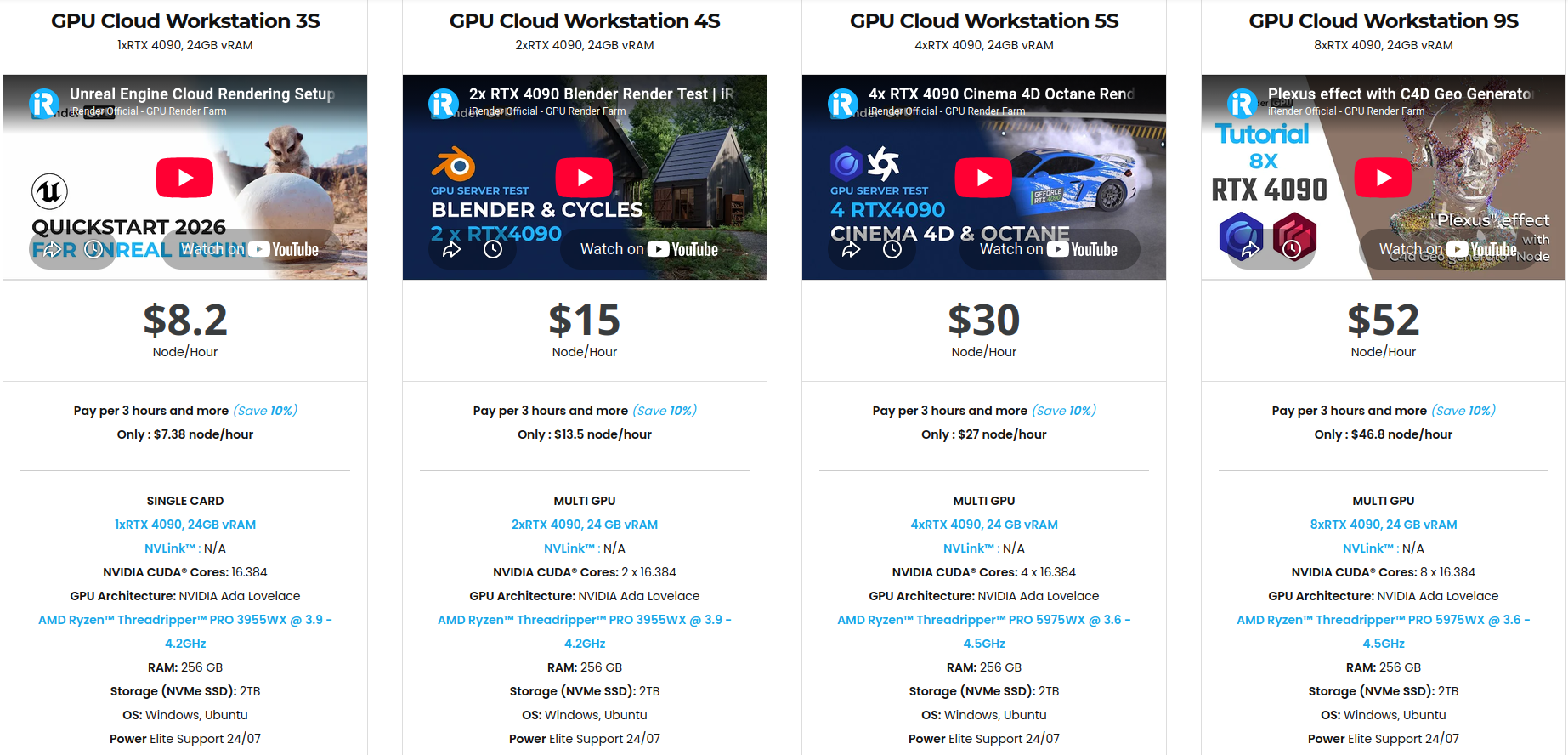
Available configurations include:
- CPU: AMD Ryzen™ Threadripper™ PRO 3955WX (3.9-4.2GHz) and AMD Ryzen™ Threadripper™ PRO 5975WX (3.6-4.5GHz)
- GPU: 1/2/4/6/8 RTX 4090/5090
For new users, iRender currently offers a 100% bonus on the first deposit within 24 hrs of registration, giving you additional rendering credits to get started with larger projects.
Maximum Speed – Absolute Freedom
Source: sidefx.com/docs/, sidefx.com/forum/

Let’s see how our service works:

FAQ
1. Why does Karma XPU take so long to start rendering?
Karma XPU may pause while compiling shaders into device-specific formats. SideFX notes that this compilation can occur at startup, when loading a new scene, or when XPU encounters new features, so the delay does not necessarily mean the renderer is stuck.
2. How do I speed up Karma XPU shader compiling?
Reduce unnecessary shader variation, keep your Houdini and GPU driver environment stable, and let XPU reuse cached compilation data where possible. SideFX also provides an option to pre-compile Karma XPU render kernels, although this applies to OptiX render kernels rather than user shaders.
3. Does changing my GPU or driver force a recompile?
It can. Karma XPU compilation is device-specific, and SideFX notes that installing a new GPU driver can require kernel recompilation. Moving to different hardware or changing the software environment may therefore introduce compilation work again.
Related Posts
The latest creative news from Houdini Cloud Rendering , 3D VFX Plugins & Cloud Rendering.