
These tools run slow because they are real-time viewers: your GPU has to draw the whole scene many times a second while you move, so the fix is a stronger single GPU, not more of them. Lumion, Enscape, Twinmotion, and D5 all lean on one card for the live viewport, and adding cards does not make that smoother. Get the GPU right, match your quality and resolution settings to it, and the lag clears. When your own card cannot keep up, you can run these apps on a remote machine with a powerful RTX 4090, since they need a real desktop with a GPU to run at all.
Rendering on a Laptop Is Destroying It: Safer Ways to Get the Job Done
Laptops are built for bursts, not for hours pinned at 100 percent. The same chassis that makes them portable gives them almost no room to move heat, so sustained render load pushes temperatures to the edge and holds them there, which is exactly the condition components hate most.
Can’t Afford an RTX 4090? Your Options Without Buying One
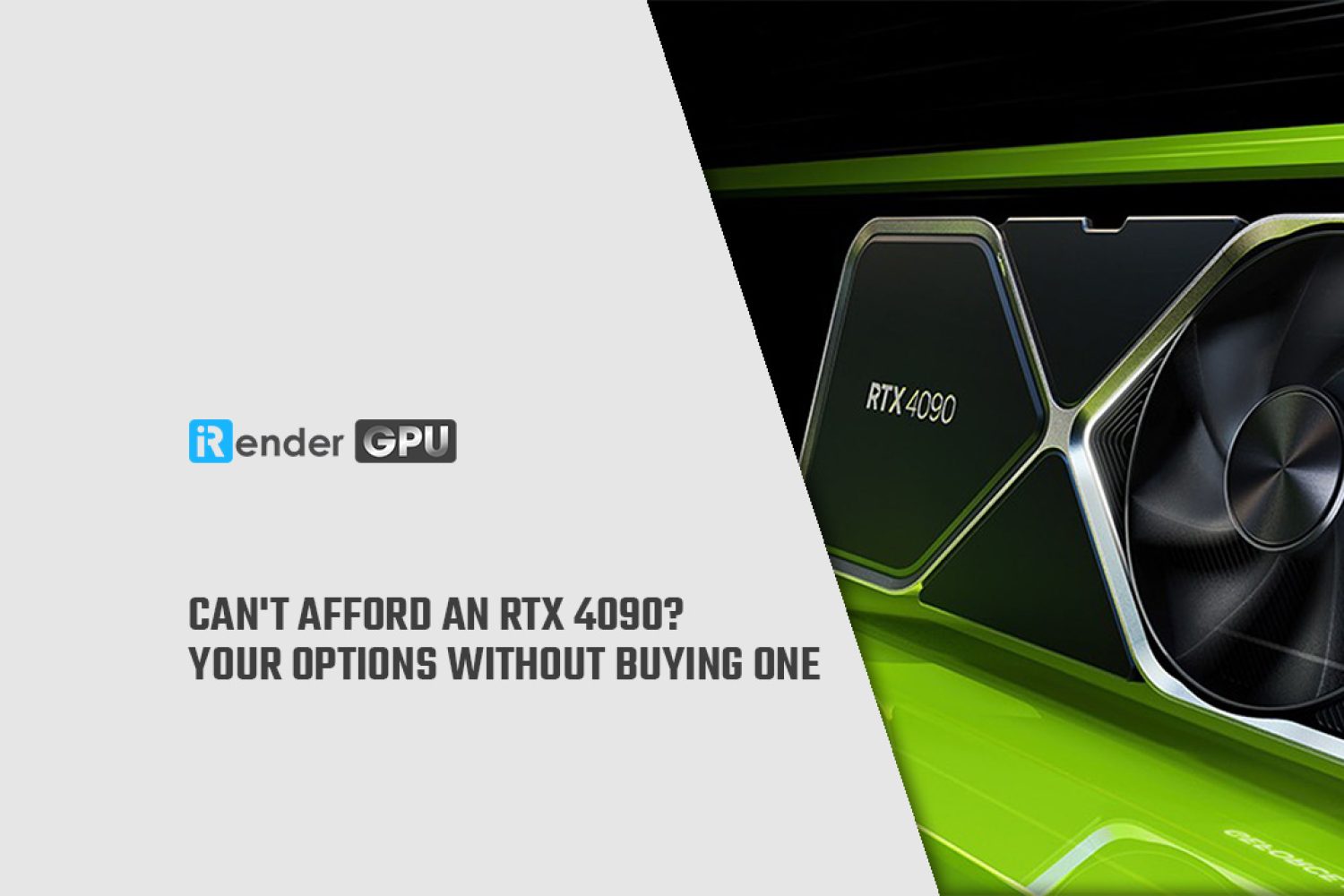
The card alone runs around 1,800 to 2,000 dollars, and that is before the power supply, the RAM, and the cooling it needs to behave. A real build around a 4090 lands closer to 3,000 plus. For a lot of artists, especially anyone just getting paid work, that is not a casual purchase. The good news is you do not need to own one to render like you have one.

Your Machine Can’t Handle 3D Rendering Anymore: Upgrade or Go Cloud?
When your machine can no longer keep up with rendering, the choice is to upgrade the hardware or move rendering to the cloud, and it hinges on how often you actually hit the wall. Upgrade if you render heavily most days and a faster card pays for itself within a year or two. Go cloud if your slowdowns are spiky, tied to deadlines or occasional heavy jobs, since renting power only when you need it skips the upfront cost and the machine that ages in your room. Plenty of people do both: a modest local machine for daily work, and cloud GPUs for the jobs that would otherwise mean buying hardware you use a couple of times a year.
Managed vs IaaS Render Farm Pricing: Which Saves You More?
A managed render farm, the SaaS kind, takes your scene and renders it on an automated system, usually priced per frame or per node-hour, with no machine for you to set up. An IaaS render farm rents you the whole machine by the hour, and you install your own software and run it yourself. Neither is cheaper across the board. One wins on standard batch jobs, the other on anything custom or interactive, and knowing which is which saves you real money.
When Is Rendering Locally Actually Cheaper Than the Cloud?
Rendering locally is cheaper than the cloud when you render heavily almost every day, your electricity is cheap, and you already own capable hardware. The more constant and predictable your render load, the more a machine you own pays off, because the upfront cost spreads thin across thousands of hours. Cloud pulls ahead the moment your heavy work becomes spiky, tied to deadlines or occasional big jobs, where renting power only when you need it beats buying hardware that sits idle.

How to Calculate Real Cost Per Frame Before You Hit Render
Cost per frame is what turns a vague feeling that renting is expensive, or that your machine is free, into a figure you can compare and put in a quote. The formula is short, the inputs are things you already know, and once you have run it once you will never guess again. Let me walk you through it for both your own machine and the cloud, including the costs people quietly leave out.

Re:Novation – ArchViz 3D Challenge 2026 Winners
The moment we have all been waiting for is finally here! The Re:Novation – ArchViz 3D Challenge Winners are revealed.
As a proud sponsor of this challenge, iRender is excited to celebrate the outstanding achievements of these artists who have worked hard and dedicated their efforts to the amazing competition.
The True Electricity Cost of Rendering on Your Own Workstation
A single RTX 4090 workstation under full render load pulls roughly 600 watts at the wall, the whole system, not just the card. Run it 250 hours in a busy month and that is about 150 kWh, plus the air conditioning working overtime to clear the heat it dumps into your room. The render rate on a cloud price page suddenly looks less lonely once you put your own power bill next to it.
Hidden Costs of Cloud Rendering: What the Price Page Doesn’t Tell You
I have answered that question enough times to know it almost always comes down to time you were billed for but did not think of as rendering. The hourly rate on a price page is accurate, but a render session includes more than the render itself: the server booting, your files uploading, the setup, and sometimes a machine left running after the job finished. None of that is a trick, it is just the part of the meter people forget is ticking. Once you can see those pieces, the bill stops surprising you and starts being something you control.