The best choice of cloud render farm for Blender with Redshift
Redshift is one of the industry’s leading GPU-accelerated render engines, trusted by artists and studios across visual effects, motion graphics, animation, architecture, and product visualization. Built on a biased rendering architecture, Redshift delivers exceptional rendering speed while maintaining production-quality results through highly optimized sampling and memory management. Today, Redshift offers full native integration with Blender, alongside other major DCC applications including Cinema 4D, Maya, 3ds Max, Houdini, and Katana. Continuous updates have expanded its feature set with advanced shading, OpenPBR and MaterialX workflows, improved GPU performance, enhanced USD support, and seamless compatibility with modern production pipelines.

Modern GPU render engines such as Redshift, OctaneRender, V-Ray GPU, D5 Render, and Chaos Vantage have become the preferred choice for artists and studios thanks to their exceptional speed and interactive rendering capabilities. By leveraging the power of modern NVIDIA RTX GPUs, these renderers dramatically reduce render times while enabling real-time look development and faster design iteration. To unlock their full potential, choosing the right workstation with a well-balanced combination of GPU, CPU, memory, and storage is essential. With this in mind, iRender will help you explore the hardware giving the best-bang-for-the-buck?
Recommended hardware configuration
1. Which processors should you choose?
When selecting a processor for GPU-accelerated rendering, the priority is no longer raw core count or dual-socket configurations. What matters most for a multi-GPU workflow is PCIe lane bandwidth, since each GPU needs a full x16 (or at least x8) lane to run at full speed without becoming a bottleneck. This is why single-socket workstation CPUs with high PCIe lane counts, such as the AMD Ryzen Threadripper PRO series, have become the standard for multi-GPU Blender and Redshift rendering, replacing the older approach of pairing dual Intel Xeon processors just to get enough lanes.
iRender’s RTX 4090 servers are built around this exact principle. Depending on the server package, machines run on AMD Ryzen Threadripper PRO 3955WX (16 cores, 3.9-4.2GHz), Threadripper PRO 5975WX (32 cores, 3.6-4.5GHz), or the newer Threadripper PRO 7965WX (24 cores, 4.2-5.3GHz). All three offer 128 PCIe 4.0 lanes, enough to feed up to 8x RTX 4090 GPUs at full speed simultaneously. This is paired with 256GB RAM and 2TB NVMe SSD storage, giving Blender and Redshift users enough headroom to load large scenes, cache textures, and keep every GPU fed with data during rendering.
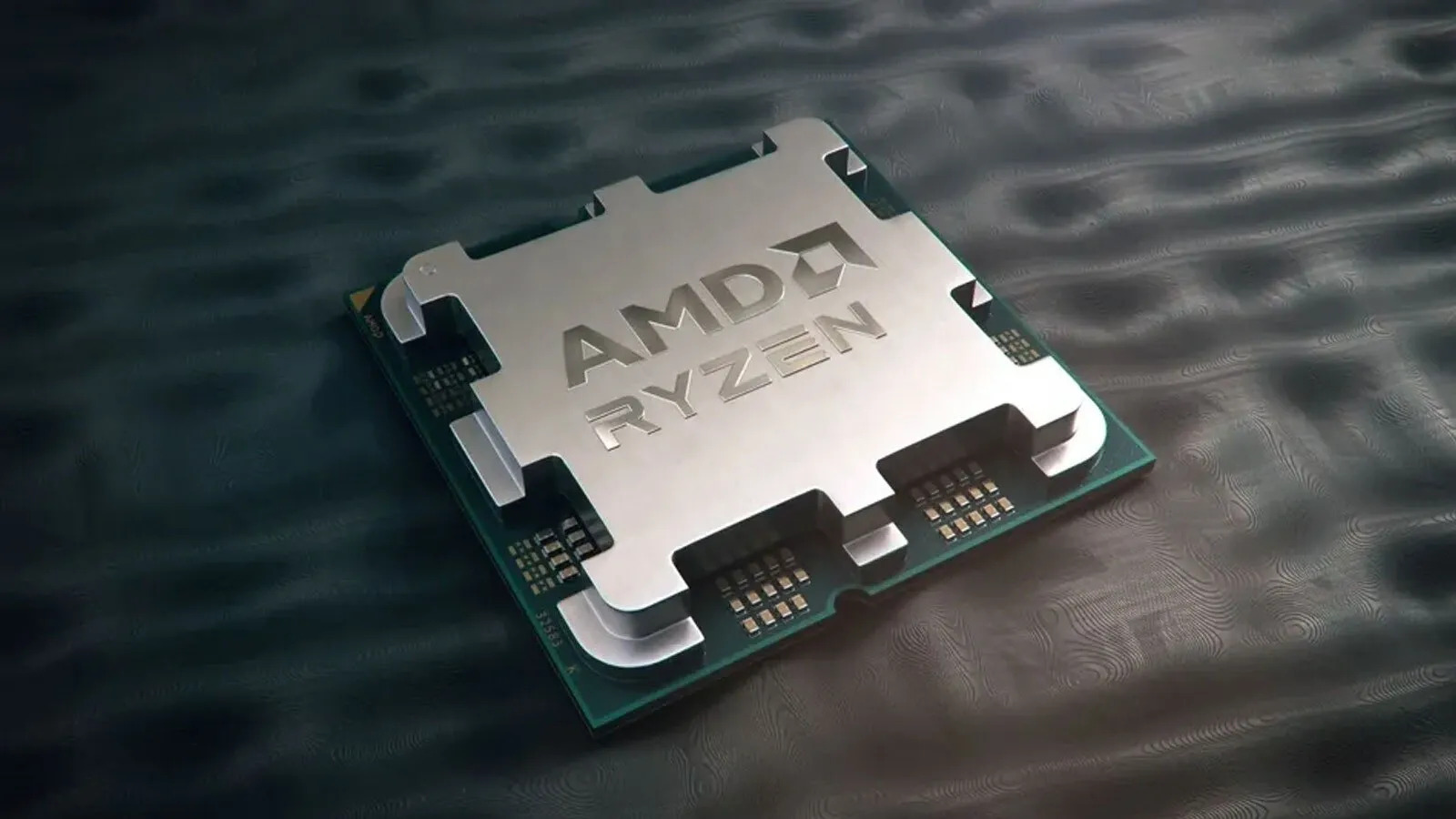
In the case of Redshift, there is also a third factor that also has a great impact on the rendering process: the number of PCIe lanes your processor can support. PCIe lanes will directly affect the amount of graphics cards you can put in your system. CPUs with a high number of PCIe lanes usually fall into the HEDT (High-End-Desk-Top) or workstation platform range and are often great for CPU rendering as well, as they tend to have more cores and, therefore, higher multi-core performance. GPUs are connected to the CPU via PCIe lanes on the motherboard. Top-tier GPUs usually need 16x PCIe lanes to run at full performance without bandwidth throttling. And the AMD Ryzen Threadripper PRO processors used in iRender’s servers possess PCIe 4.0 with 128 lanes, enough to run up to 8x GPUs simultaneously at full x16 speed without any bandwidth compromise.
2. How many GB RAM will be suitable?
16GB and 32GB RAM are respectively considered optimal to use Redshift and Blender on the official website of the manufacturer. However, in fact, Blender does a bit of everything, and it isn’t optimized for narrow performance conditions like other modeling tools. That is the reason why Blender needs more RAM than other programs. As the RAM caching system repeatedly re-caches objects for each active modifier, it has a great impact on Blender’s modifier stack. It has a similar impact on sculpting, too, due to the differences between the sculpting and modeling mesh data structures.
If you’re using Redshift, even for low-poly or simple scenes, you will need at least 16-32GB of RAM for your PC to work well. If you tend to multitask and this is not your first workstation build, more than 64GB will help you limit data loss and improve Redshift’s stability. That’s also the reason iRender equips every RTX 4090 server, from single-GPU to 8x GPU configurations, with 256GB of RAM as standard, so multitasking (running multiple apps at the same time) is smoother and more consistent regardless of which package you choose. We understand the actual needs of the artist, we understand that a modern 3D artist needs to be more creative than just a software.
3. Which storage drive should you get?
The highest performance drives available today are NVMe based Solid State Drives (SSDs), and these are generally all we recommend for primary drives. SSD’s ensure your system will boot as quickly as possible, keeps your system as responsive as possible, and reduces your application/project loading times.
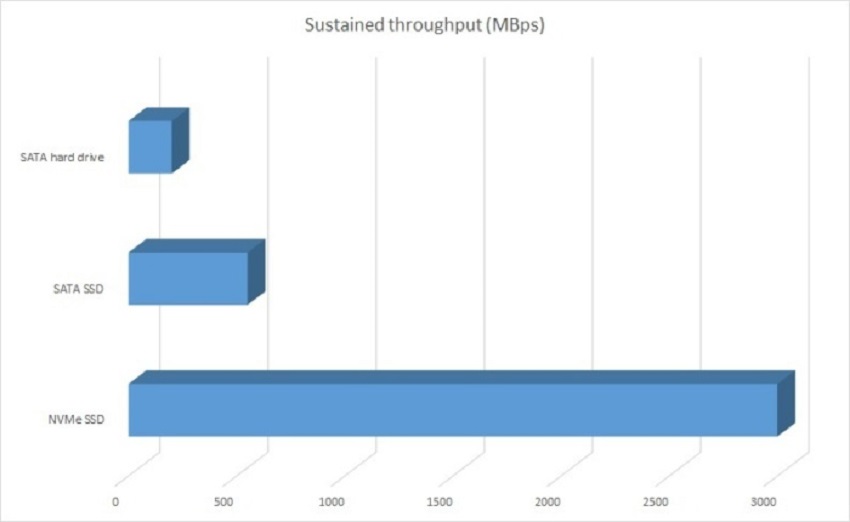
While many other render farms still rely on HDD or SATA SSD storage to cut costs, iRender strongly invests in NVMe SSD for the entire render farm despite the higher cost. We believe rendering in 2026 should run in parallel with fast, consistent I/O, not be bottlenecked by disk speed.
4. Which graphics cards are best for Redshift?
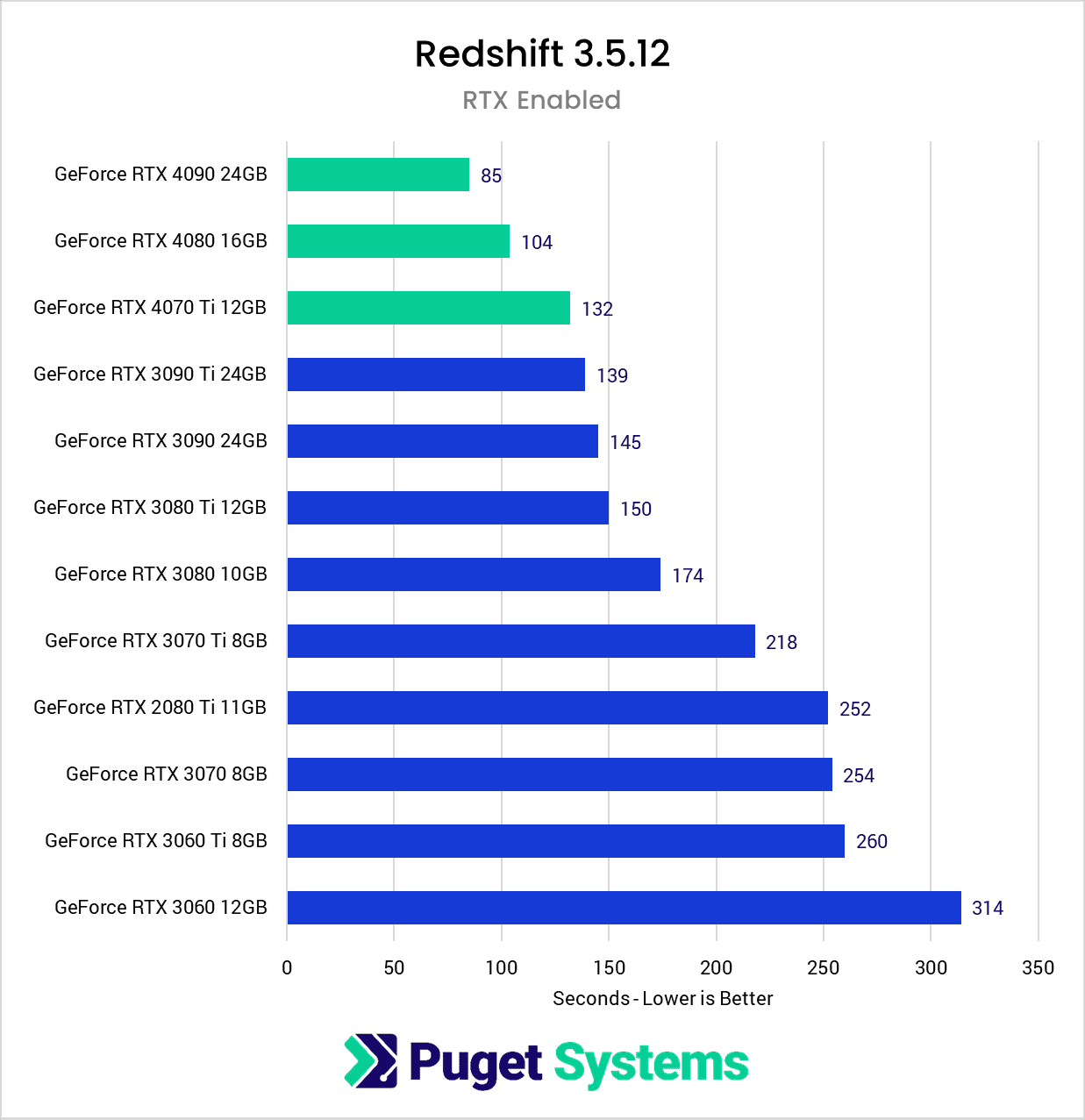
Once you have a system configuration in mind with strong foundations, you can now consider GPU configurations to get the most out of your application and budget. Redshift is only compatible with NVIDIA CUDA. So, it’s a pity for those who are AMD fans because it will not work on them. As a general rule of thumb, more graphics cards are better performing than a single high-end card for GPU rendering. At the time of writing this article, 16GB+ VRAM is recommended for optimal rendering performance by Redshift, and modern texture-heavy or high-resolution scenes increasingly push that requirement higher. Now the next question is which NVIDIA card gives you the best value for GPU rendering.
Consumer GeForce cards remain the best price-to-performance option for Redshift, since they deliver higher CUDA core counts and clock speeds than professional Quadro/RTX-workstation cards at a fraction of the cost. The best NVIDIA GPUs for rendering right now are:
- RTX 4070 Ti (7680 CUDA Cores, 12GB VRAM)
- RTX 4080 (9728 CUDA Cores, 16GB VRAM)
- RTX 4090 (16384 CUDA Cores, 24GB VRAM)
The RTX 4090 is currently the top pick for Redshift, offering the highest CUDA core count and VRAM headroom in a single consumer GPU, and scales close to linearly when you add more cards in a multi-GPU setup. This is also the exact GPU iRender’s entire render farm runs on today, from single-GPU to 4x-GPU server packages.
What you can get from iRender Farm?
In other popular render farms, the rendering process will depend on the project distribution on render farm through Farm Manager – the supplier’s farm management tool. That means you don’t have the ability to choose the optimal PC configuration you want for Blender and Redshift.
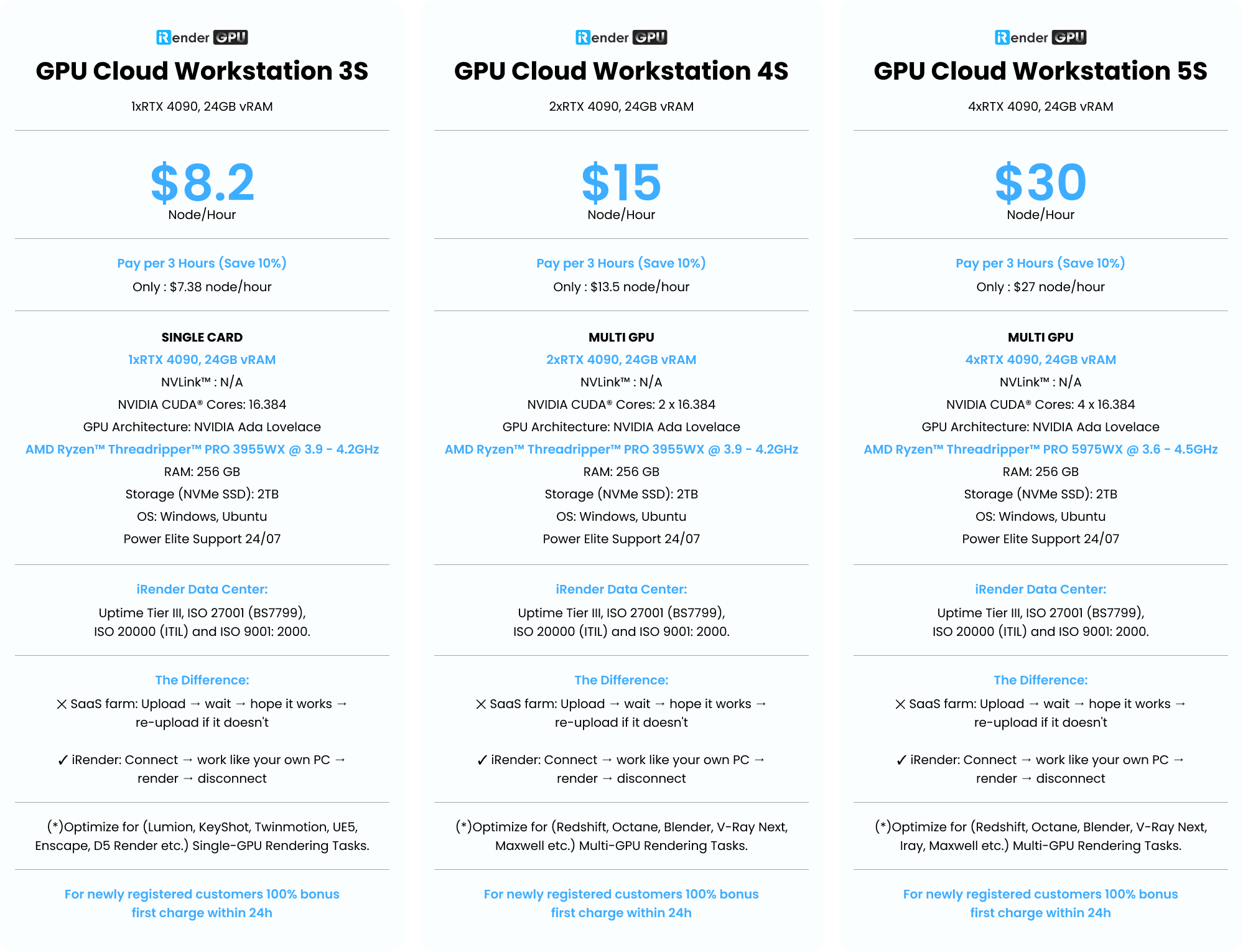
But at iRender, we provide our customers with an extremely unique rendering solution. We offer a specific Multi-GPUs server for designers with a passion for Redshift, Blender, Octane, …with different configuration options depending on your usage needs: 1x, 2x, or 4x RTX 4090 per server, each with 24GB VRAM, so you can scale your setup to match your project size and budget without paying for more GPUs than you need. All configurations run on AMD Ryzen Threadripper PRO CPUs with 256GB RAM and 2TB NVMe SSD storage, giving Blender and Redshift enough headroom to load and cache large scenes across every GPU in the server. With iRender: technology must be the latest.
The only render farm provides fixed rental package
Normally, the cost is calculated according to the actual time you use the machine: from the time you connect our server to the moment the computer is shut down. But you can always save 10% with our Fixed Rental feature, applied to any rental of 3 hours or more. Whether your project takes half a day or several days, you lock in the discount from the moment you commit to a fixed-time block, and you can leave the device idle without extra charges. iRender – efficient render – competitive cost.
Let’s see some our video test Blender on GPU WorkCloud Station on server 4S, 5S!


Real human support
iRender has a great number of enthusiastic staff ready to support you daily from 6:00 to 24:00 (GMT+7). Whenever you have trouble using our server, or even with your software, our iRender Support Team is always there to help you solve your problem. Live support is unavailable from 0:00 to 6:00 (GMT+7) daily. We believe the quality of support we provide is as vital as the technology we deliver. We provide unmatched support tailored to your specific needs and goals. What Redshift users can get from iRender is not only the best quality products but also the high security and the most comfortable render time.
Final thought
We hope this overview has shown you some information to utilize a GPU renderer like Redshift in the cloud. At iRender, we try our best everyday to offer the best thing to our beloved customers, what a 3D artist deserves, what an artwork deserves. What you get is more than rendering to create the final product. You receive a new technology solution, a good service, high security, features and softwares, and other utilities to help you save costs and time, reduce stress while working and most importantly, it breaks the creative limits of many technology ‘artists’ nowaday. If you have any questions, please do not hesitate to reach us via Whatsapp: +(84) 916017116. We will be ready to help you in any way!
Become a member of the iRender community today to stop wasting pointless hours of rendering. Always at the forefront of cutting-edge graphics technology, we do the rendering, the creativity is yours!
Thank you & Happy Rendering!
Related Posts
The latest creative news from Redshift Cloud Rendering, Blender Cloud Rendering, 3D VFX Plugins & Cloud Rendering.