What Rendering Trends Are Shaping the VFX Industry in 2026?
The VFX industry in 2026 is at a turning point. After years of rapid experimentation, the most impactful technologies have matured into real production tools, actively deployed in commercial projects, not just tested in R&D pipelines. Real-time engines now deliver final-pixel output. AI handles tasks that once consumed entire artist weeks. And cloud rendering has become the backbone of distributed production worldwide.
For VFX artists and studio leads, keeping up with these shifts is no longer optional. The studios moving fastest in 2026 are the ones that understand which trends truly matter and how to apply them effectively.
Here are the top VFX rendering trends 2026 defining the industry this year, and what they mean for your workflow. Let’s explore in this blog with iRender.
1. Real-Time Rendering Goes Final-Pixel
For years, real-time rendering was primarily a previs tool- useful for rough layouts, but not suitable for final delivery. In 2026, that distinction is disappearing fast.
Modern engines like Unreal Engine 5 can now produce final-pixel VFX for professional productions. The same tool used to block a shot can now deliver it at near-cinematic quality, eliminating entire pipeline stages and dramatically reducing iteration cycles.
The impact is immediate:
- Directors and supervisors can review near-final imagery in real time
- Creative decisions happen faster, on the spot
- Costly revision loops from offline rendering are minimized
LED volume stages are accelerating this shift even further. By combining real-time engines with large-scale LED environments, productions can achieve in-camera VFX that seamlessly integrates with live action at increasingly accessible costs.
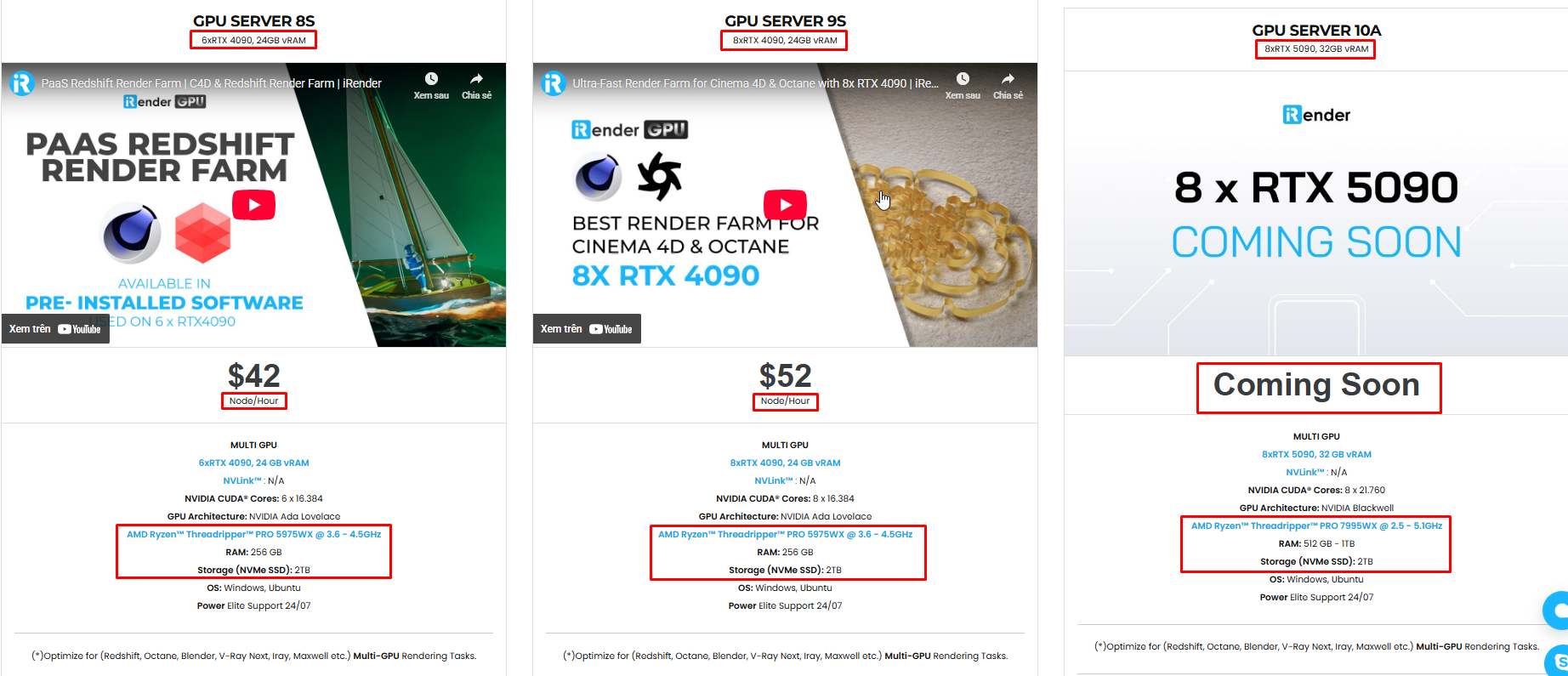
What this means for you: Real-time performance depends heavily on GPU power. High-end infrastructure, such as iRender’s multi-GPU nodes (up to 8x RTX 4090), ensures you can run real-time engines at full fidelity without hardware bottlenecks.
2. AI Handles the Repetitive Work - Artists Handle the Creative Work
AI has moved beyond hype. In 2026, it’s a practical, embedded part of the AI rendering workflow.
Rather than replacing artists, AI eliminates repetitive, low-value tasks, allowing creative professionals to focus on storytelling and visual design.
Here’s where AI is making the biggest impact:
- Rotoscoping & cleanup: Automated with artists supervising instead of manually tracing frames
- Simulation previews: Machine learning approximates complex effects like smoke and fire in real time
- AI denoising: Tools like NVIDIA DLSS and OIDN reduce render samples dramatically
- Asset management: Smarter tracking and version control across large productions
As one studio CEO put it: “AI is doing the heavy lifting, but it’s about using it smartly so artists can focus on creativity.”
What this means for you: AI-driven tools are GPU-intensive. Leveraging modern RTX-powered infrastructure is essential to benefit from AI acceleration in production workflows fully.
3. Cloud Rendering Is the Backbone of Distributed VFX Production
VFX production in 2026 is global by default.
Teams are distributed across countries, vendors operate across time zones, and collaboration happens continuously. The traditional single-location render farm is no longer practical.
Cloud rendering enables this new model.
It allows studios to:
- Access powerful GPU resources from anywhere
- Scale instantly for peak workloads
- Collaborate seamlessly across regions
The cloud rendering VFX studio is now the standard operating model.
Industry initiatives like the MovieLabs 2030 Vision, backed by major studios, reinforce this direction, pushing for fully cloud-based production pipelines from day one.
What this means for you:
Platforms like iRender act as remote GPU workstations, not just render queues. You can install your own tools, connect from anywhere, and scale performance on demand.
4. Stylized Aesthetics Are Competing With Photorealism
Photorealism is no longer the only goal in VFX.
Inspired by visually distinctive productions, studios are investing more in stylized rendering, embracing painterly looks, graphic styles, and non-photorealistic approaches to stand out creatively.
This shift reflects a deeper reality:
When everyone can achieve realism, style becomes the differentiator.
Stylized rendering is not simpler; it often requires:
- Custom shaders and lighting models
- Specialized render passes
- Tight artistic control across entire sequences
For artists and TDs, this opens new opportunities to define unique visual identities.
What this means for you: Stylized pipelines often rely on non-standard tools and configurations. iRender’s full software flexibility allows you to build and run custom rendering workflows without restriction.

5. Rendering Intelligence Over Raw Horsepower
In the past, faster rendering meant more hardware. In 2026, it means smarter systems.
Rendering performance is increasingly driven by intelligence at every level:
- AI-optimized hardware: Modern GPU architectures accelerate neural rendering tasks
- Smarter engines: Adaptive sampling and AI denoising reduce compute requirements
- Pipeline optimization: Intelligent scheduling and resource allocation improve efficiency
The result shows that scenes that once took hours per frame can now render in a fraction of the time, not just because of faster GPUs, but because the entire pipeline is optimized.
What this means for you: Access to the latest GPU technology, combined with intelligent rendering tools, is key to staying competitive. iRender continuously upgrades its infrastructure to support these advancements.
Conclusion
The VFX rendering trends 2026 are not future predictions, they’re already shaping real production pipelines today.
- Real-time rendering delivers the final output
- AI is accelerating workflows
- Cloud infrastructure is enabling global collaboration
- Stylization is redefining visual storytelling
- Intelligent systems are outperforming brute-force hardware
The question isn’t whether these changes will affect your workflow, it’s whether you’re ready to take advantage of them.
With accessible, high-performance cloud infrastructure, you no longer need a Hollywood-scale budget to work at a Hollywood level.
iRender – Ready to Render Faster Without the Cost Uncertainty
Why iRender is a great solution:
If you’re tired of dealing with slow local machines, rising electricity costs, and unpredictable render times, it might be time to switch to a more scalable solution.
With iRender , you get:
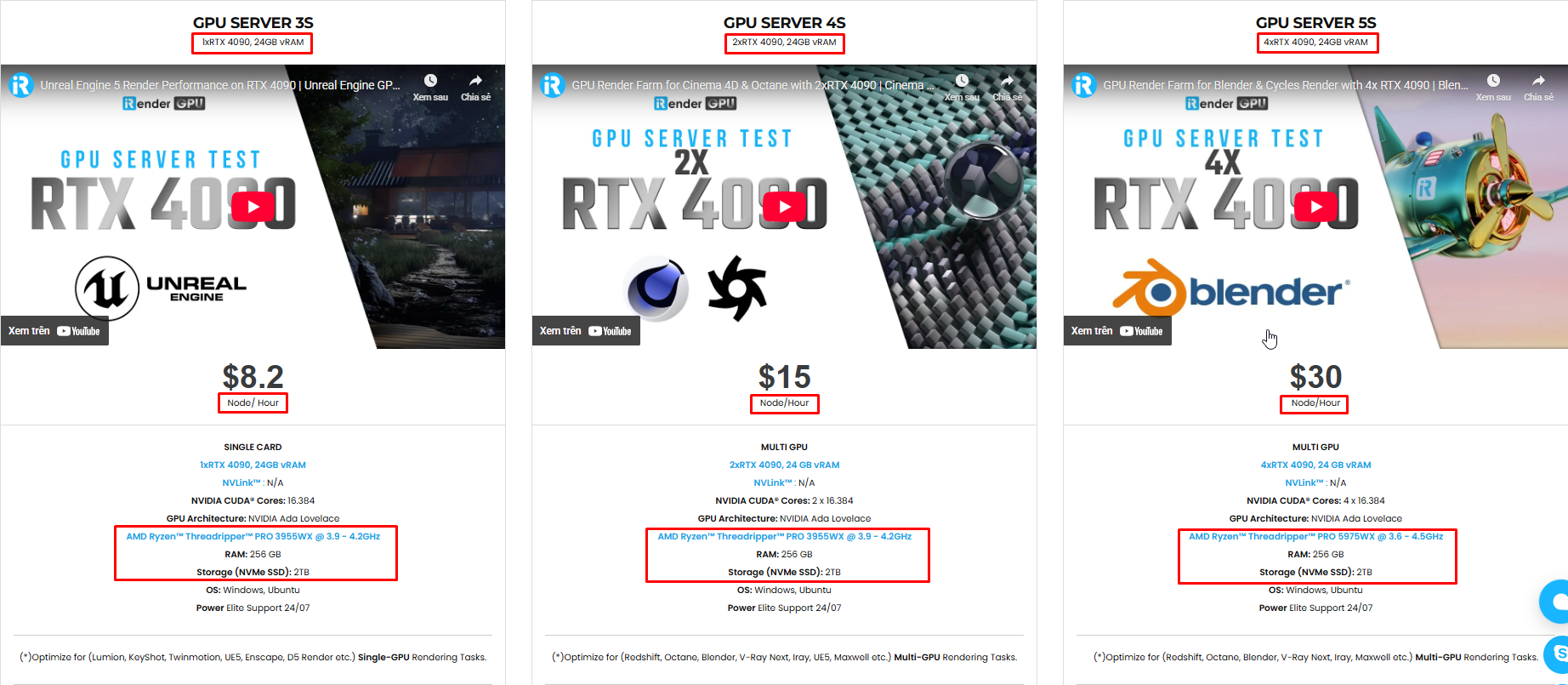
- High-performance GPU servers RTX 4090
- Multi-GPU scaling for faster turnaround
- Full control over your software and plugins
- Transparent pricing — no hidden costs, no infrastructure worries

One of the biggest barriers to multi-GPU rendering is the upfront cost of hardware. With iRender, you pay only for the time you use, making it highly cost-effective whether you’re a freelancer rendering a single scene or a studio handling large projects with tight deadlines.
You can see the information about iRender’s service packages here.
Try iRender Today – Get Started for Free
Experience the difference yourself:
- Free trial available for new users
- No long-term commitment
- Instant access to powerful GPU machines
Start rendering in minutes and see how much time (and cost) you can save. Get Started Now and don’t let hardware limits or rising energy costs slow you down.
iRender is currently offering a SPECIAL PROMOTION: enjoy a 100% bonus on your first top-up. This means your first deposit will be doubled, and your points never expire, allowing you to use them whenever you need. Switch to iRender and take full control of your rendering workflow today.
We’re always happy to help you with any questions. If you have any problems or questions, don’t hesitate to contact our 24/7 support team. Or via WhatsApp: 0912 785 500 for free advice and support.
Sign up for an account today to experience and enjoy our services.
Thank you & Happy Rendering!
Related Posts
The latest creative news from Blender Cloud Rendering